THE JOURNAL / ELOPEMENT RESOURCES
Eloping in the White Mountains with an AMC Hut as Home Base
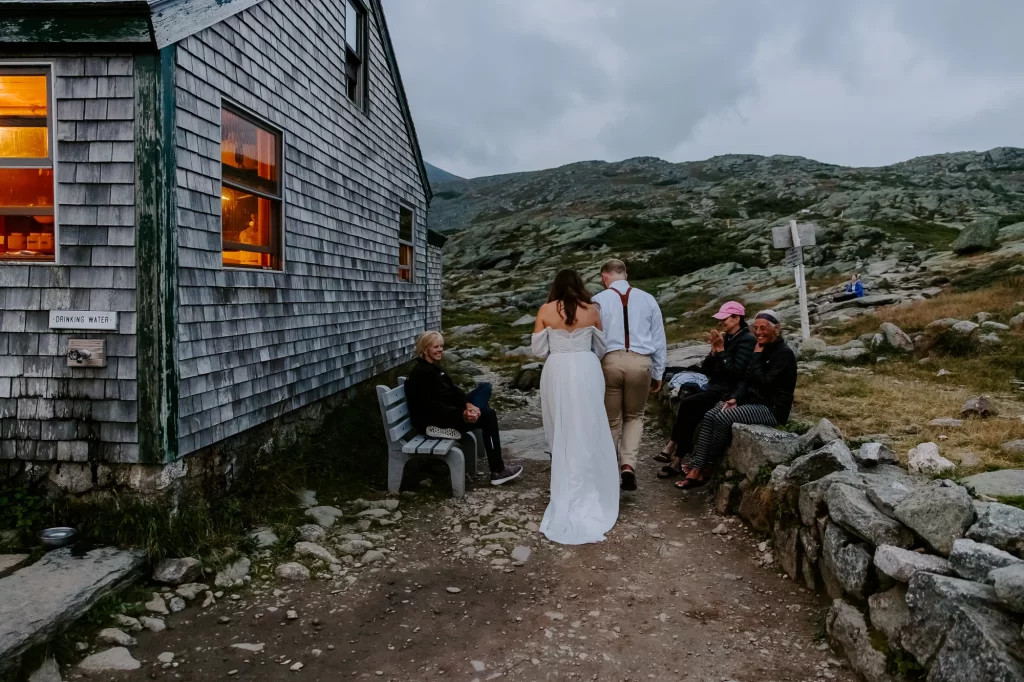
An AMC hut can give a White Mountains elopement a place to begin and end: a bunk for the night, a shared table, and time together between the hike and your vows. You can carry your wedding clothes up the trail, settle in with your people, and make the ceremony part of a longer experience in the mountains.
I have photographed two elopements with AMC huts as home base: Erika and Drew stayed at Mizpah Spring Hut before their sunrise ceremony on Mount Pierce; Allie and Brian stayed at Lakes of the Clouds Hut and exchanged vows on Mount Monroe. The hut stays gave each celebration its own rhythm, and the two days unfolded quite differently.
If you are considering something similar, this guide is a place to start. My White Mountains elopement photography page introduces the wider region; here, we will look specifically at planning an overnight celebration around a hut stay.
What does a hut-based elopement actually mean?
The hut is your overnight base, with your vows taking place on a nearby trail or viewpoint. Let AMC know you are eloping when you arrange your stay, and reserve beds for everyone in your party on the dates you need. For a small, low-impact, noncommercial ceremony on White Mountain National Forest land, a wedding permit is generally not required. Follow Leave No Trace, stay on established trails and durable viewpoints, and keep the space open to other hikers.
AMC operates eight White Mountains huts reached on foot. Expect backcountry accommodation and shared spaces. During full-service stays, breakfast and dinner are included; facilities, opening dates, and service levels vary by hut. Start with AMC’s hut directory and the page for the hut you are considering.
Choose the experience as a whole: who will hike with you, what everyone can comfortably carry, how you will spend the evening, and what happens if the weather changes. The best photograph is only one part of a day you still have to walk into and back out of.
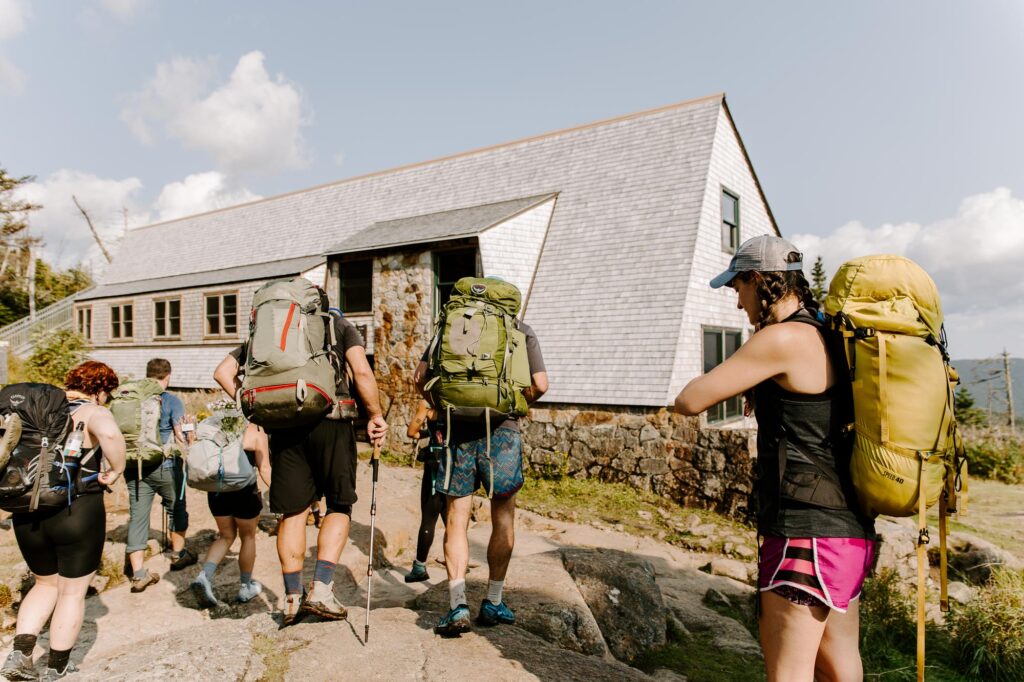
All eight AMC huts to consider as your home base
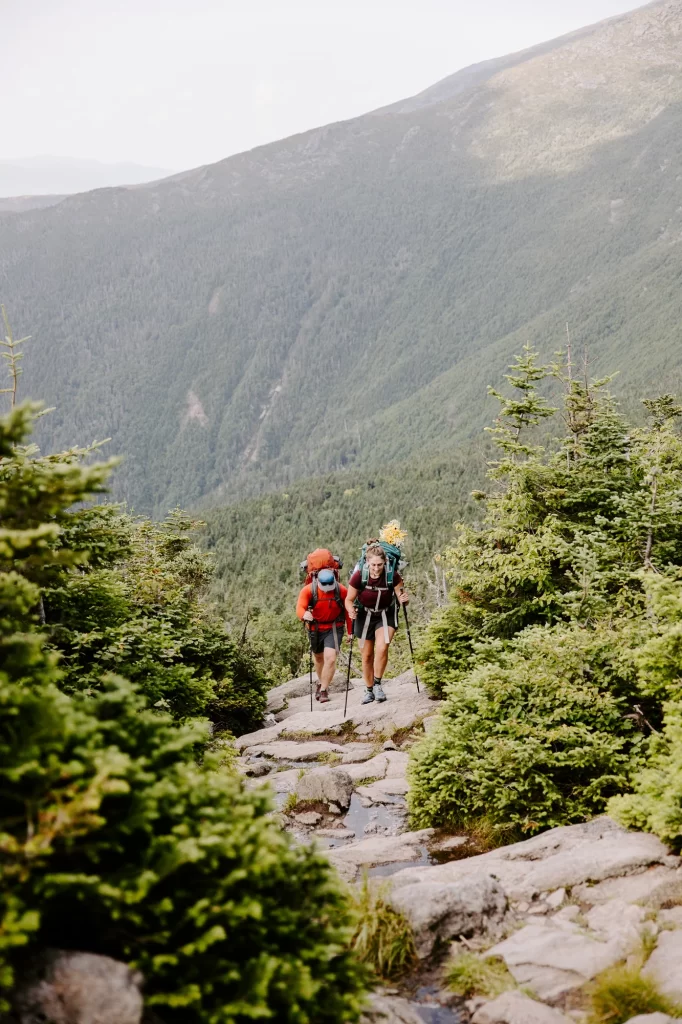
Begin with the hike and the people doing it. A location that suits two experienced backpackers may be a poor fit for a mixed group carrying overnight gear. Consider the approach, elevation gain, footing, exposure, and the additional distance to any ceremony location. The walk to the hut is only part of the route.
- Mizpah Spring: a base in the southern Presidential Range, near Mount Pierce and Mount Jackson. Its wooded setting and the onward hike to open views are separate parts of the plan. Check Mizpah’s access and season information.
- Lakes of the Clouds: below Mount Monroe, with a strenuous approach and exposed alpine surroundings. Its full-service season is shorter than some other huts, so confirm the actual dates before choosing your wedding day. Check Lakes of the Clouds information.
- Greenleaf: worth exploring if you are drawn to the Franconia Ridge area. A hut stay and a ridge outing still need a realistic route and weather plan. Explore Greenleaf Hut.
- Madison Spring: an option to research for a northern Presidential Range trip. Match the full journey to your group’s experience, including any time above treeline. Explore Madison Spring Hut.
- Lonesome Lake: a lakeside base with views toward Franconia Ridge and a shorter approach than many higher huts. There is still a climb with overnight gear. Lonesome Lake is within Franconia Notch State Park, so check its location-specific rules rather than applying national forest guidance to every site. Explore Lonesome Lake Hut.
- Zealand Falls: a base for a day built around forest, water, and the Zealand Valley. Its approach has less elevation gain than many of the higher huts, which can help when considering the experience of your whole group. Explore Zealand Falls Hut.
- Galehead: a more remote-feeling base between Galehead Mountain and South Twin. The longer, strenuous approach makes the journey a substantial part of the celebration, with time needed for the walk back out as well. Explore Galehead Hut.
- Carter Notch: a notch setting with mountain ponds, cliffs, and a rocky landscape, reached via Nineteen Mile Brook Trail. Consider it if you are drawn to time beside the water and enclosed mountain scenery. Explore Carter Notch Hut.
You do not need to choose the highest hut to have a meaningful mountain elopement. I can help you narrow the photography plan around the kind of experience you actually want.
Plan the stay, the ceremony & the photography together
- Reserve your dates & let the hut know. Book beds for everyone staying overnight and tell AMC you are eloping. For the small national forest ceremonies described here, this is a heads-up about your plans, rather than a request to hire the hut as a wedding venue.
- Count the whole party. Include the couple, guests, photographer, and anyone else staying overnight when arranging beds. Make sure everyone is reserved for the right nights.
- Keep the hut schedule in view. Ask about check-in, meals, quiet hours, and early departures before building the photography timeline. A sunset or sunrise ceremony should not depend on staff changing the communal meal schedule.
- Understand the shared spaces. Common areas and bathrooms are shared with other hikers, and your bunkroom may be too. If your party is booking enough beds to fill a whole bunkroom, arrange those beds together with AMC and confirm the room allocation. A bunkroom for your group still does not make the common spaces private.
- Budget for the whole trip. Include lodging, the full photography coverage you want, transport, meals beyond those provided, and the gear your group needs. Current hut rates come from AMC; an overnight photography proposal depends on the full itinerary.
Keep the celebration simple and considerate: follow Leave No Trace, respect quiet hours, and leave trails and viewpoints available to other visitors. The Forest Service’s wedding guidance sets out the rules, including keeping public access open and avoiding confetti and decorations. Larger gatherings and locations outside national forest land have different requirements.
A two-day elopement can leave room for the whole experience
This is one possible sequence once your beds are reserved and you have chosen a route. Exact times come later, with the hut schedule, daylight, conditions, and the group’s hiking pace in mind.
- Day one: meet at the trailhead, hike in with time for breaks, check in, settle your packs, and share the evening together. An evening ceremony can fit around the conditions, your route, and the hut’s meal schedule.
- Day two: a morning ceremony or a slower breakfast together, followed by the walk out. Leave enough time and energy for the descent and the drive afterwards.
You can also spend a second night, or combine a private hiking day with a separate celebration involving family. Start with who you want alongside you. Then decide which parts of the experience make sense to share.

Weather, packing & caring for the mountains
Build an alternative you would genuinely be comfortable choosing: a different time, a lower route, or another suitable trail or viewpoint. A hut reservation does not make an exposed route suitable in poor weather. Use the Mount Washington Observatory’s Higher Summits Forecast alongside current trail information and an honest assessment of the conditions. Turning around remains an option.
Pack for the hike and the overnight before adding wedding details. Footwear with traction, weather protection, warm layers, headlamps, navigation, food, water, personal essentials, and the sleeping equipment specified by AMC belong in the plan. Follow the current hut packing list for your dates rather than assuming bedding or services will be the same everywhere.
Wedding clothes can travel in a protected bag inside your pack. Think through where you can change without expecting a private dressing room, and choose details you are happy carrying out again. Keep to established trails and durable surfaces, and protect alpine vegetation. The landscape should look the same when we leave.
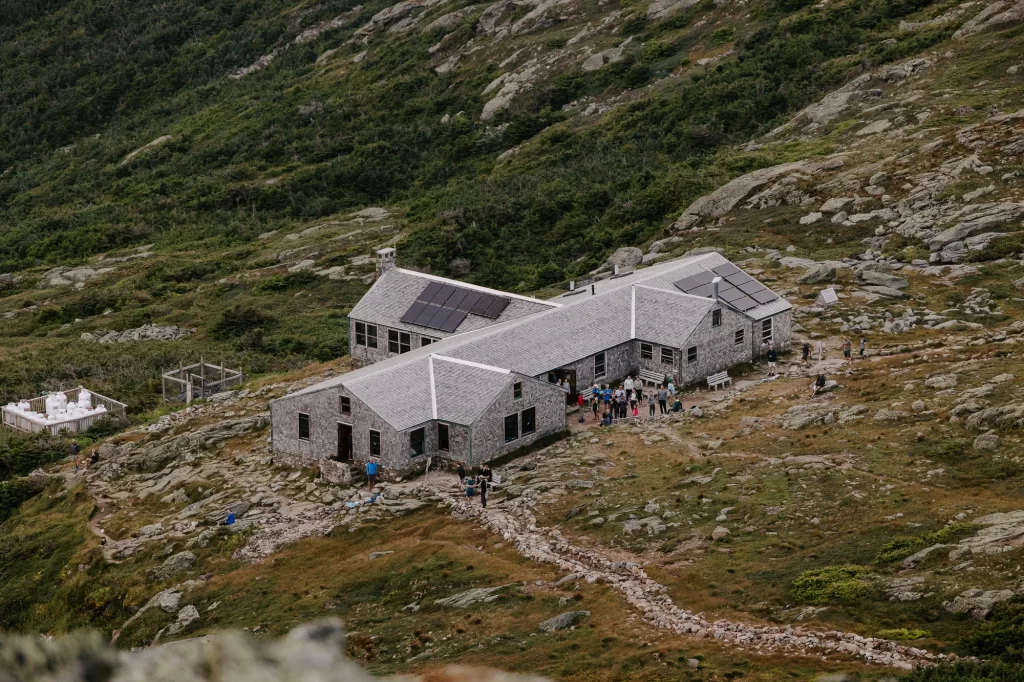
Photographs of the day you actually had
The ceremony matters, and so do the smaller parts around it: a friend helping with a pack, someone making coffee, the conversation on the trail, the way you look at each other once the climb is over. My documentary approach makes space for those moments alongside portraits in the landscape.
I grew up in New Hampshire, have hiked all 48 of its 4,000-footers, and have photographed both of the hut-based celebrations in this guide. I help with location suggestions and a photography timeline that accounts for the journey. For a more involved trip, we can discuss longer or multi-day coverage rather than trying to fit everything around a short ceremony window.
Two real elopements, two different ways to spend the night
Mizpah Spring Hut & a Mount Pierce sunrise
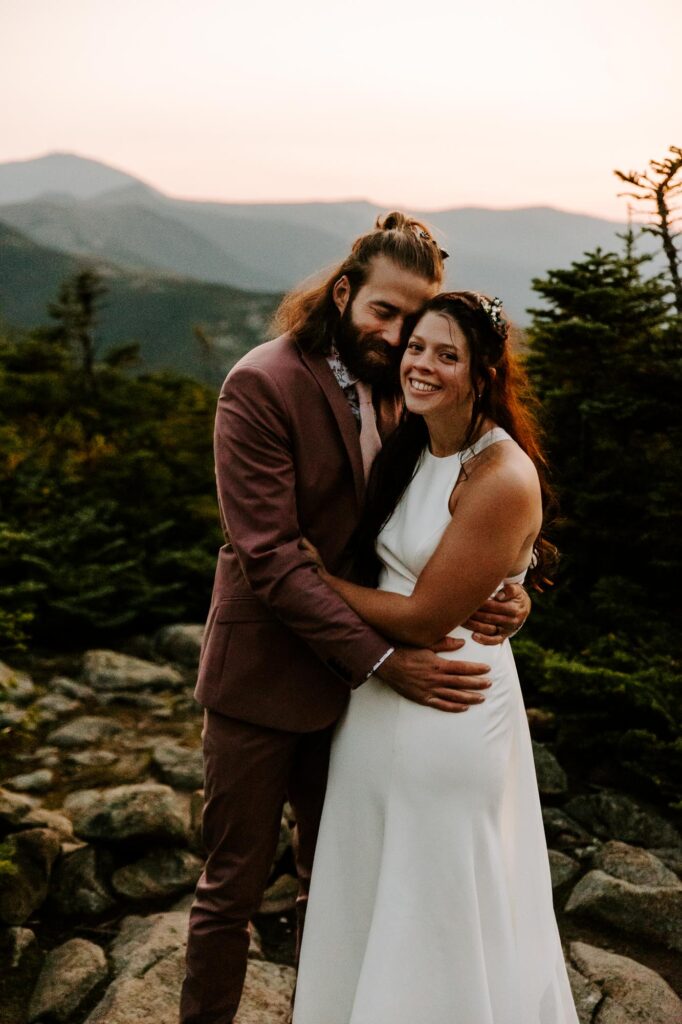
Erika and Drew hiked to Mizpah the afternoon before their wedding. They shared dinner and games at the hut, then got up before dawn to prepare by headlamp. Their friends joined them for vows on Mount Pierce as the light arrived across the mountains. Afterwards, we photographed the walk back along the Appalachian Trail.
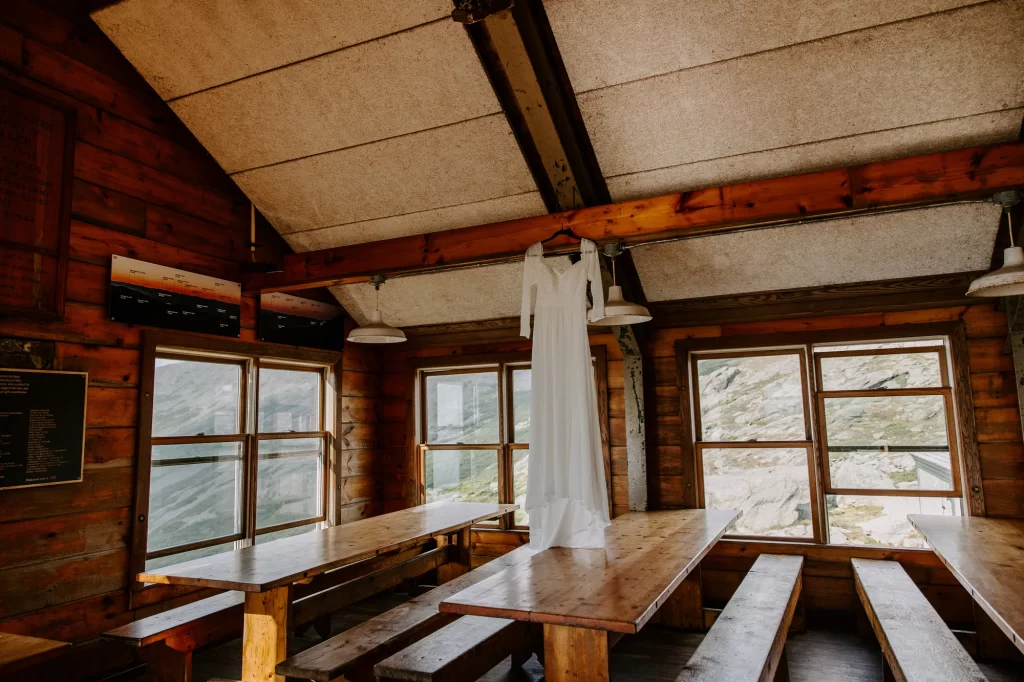
That story shows how much an overnight can hold around the ceremony: the trail in, the evening together, wedding clothes hanging in the hut, and the quiet work of getting ready in the dark. See Erika and Drew’s Mount Pierce elopement.

Lakes of the Clouds Hut & vows on Mount Monroe
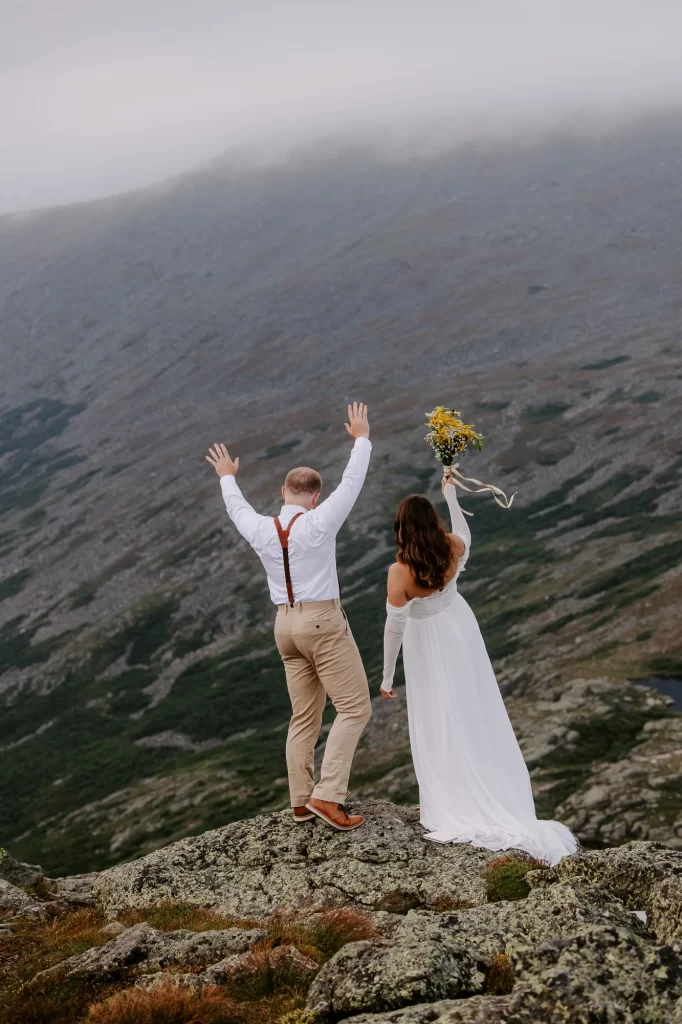
Allie and Brian hiked up with two other couples and settled into Lakes of the Clouds. We had planned their vows for sunrise the next day. When the forecast pointed to better visibility that evening, we adjusted, and they exchanged vows on Mount Monroe before returning to the hut.
By morning, the mountains were wrapped in cloud. Keeping the ceremony timing flexible made a difference. This is an example of a plan changing around conditions, rather than a promise that an overnight stay guarantees clear skies or a summit ceremony. See Allie and Brian’s Lakes of the Clouds elopement.
AMC hut elopement questions
Do we need the hut’s permission to elope nearby?
For the small national forest elopements described here, let AMC know you are eloping and reserve beds for everyone staying. You are using the hut as your overnight base, with vows on a nearby trail or viewpoint. Respect the hut’s routines and other hikers throughout your stay.
Will we have a private bunkroom?
Bunkrooms can be shared between reservations. If your group is booking all the beds in a bunkroom, arrange the room allocation with AMC so you can stay together. Bathrooms, dining areas, and other common spaces remain shared.
Do we have to have a summit ceremony?
No. The overnight stay can be the part you care most about. We can explore a ceremony that suits your group and conditions without making a particular summit the measure of a successful day.
Can our friends and family come?
Yes. Reserve a bed for everyone staying overnight and choose a route the whole group can manage. Account for the slowest comfortable pace, overnight gear, and the descent. You can also keep the hike private and celebrate with other people before or afterwards.
Is an AMC hut the same as an RMC camp?
No. Randolph Mountain Club maintains a separate set of camps in the northern Presidentials. RMC currently describes overnight use as first come, first served, which changes how dependable a particular overnight base can be. Read RMC’s current camp information before building a plan around one.
Can you photograph the hike and the overnight experience too?
Yes. My multi-day elopement package includes every moment of your elopement experience: the hike, getting ready, your vows, the overnight experience, and the time you spend together in between.
Hut and planning information checked October 31, 2026. Use the official sources linked here for current operating dates, services, reservations, and trail conditions.
A wedding day worth the walk.
Tell me what draws you to the mountains and who you would like to bring. We can start with the experience and work through the photography plans together.