THE JOURNAL / WEDDING RESOURCES
A Documentary Wedding Photography Timeline
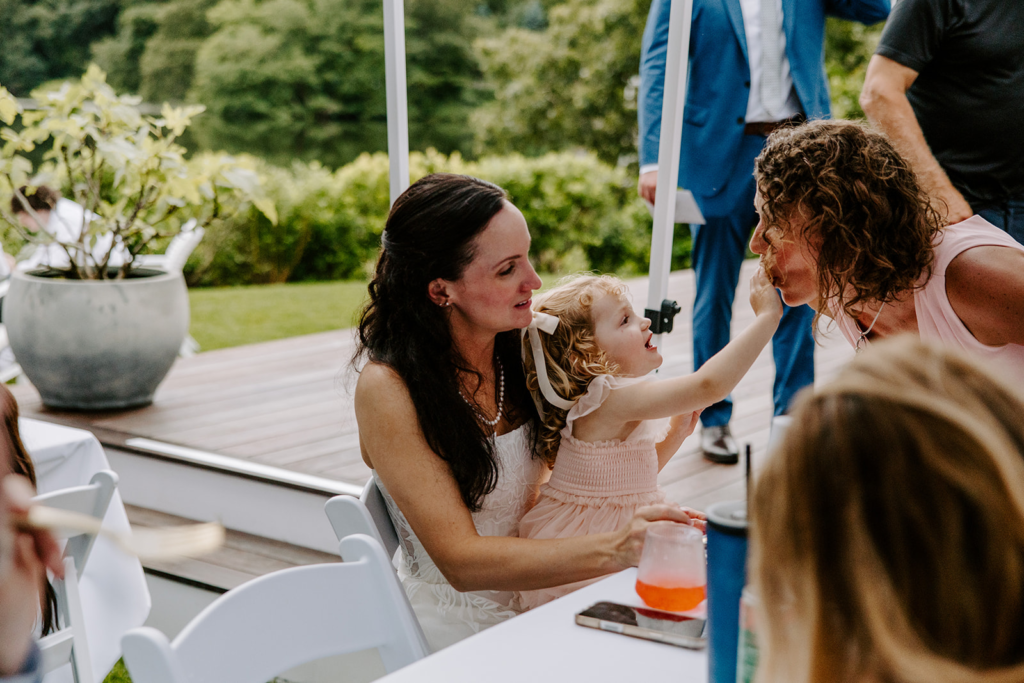
A documentary wedding photography timeline makes space for the events you have planned and the moments you cannot schedule. It gives family photographs, travel, and the ceremony a place in the day, while leaving you time to talk, eat, laugh, and be with the people you invited.
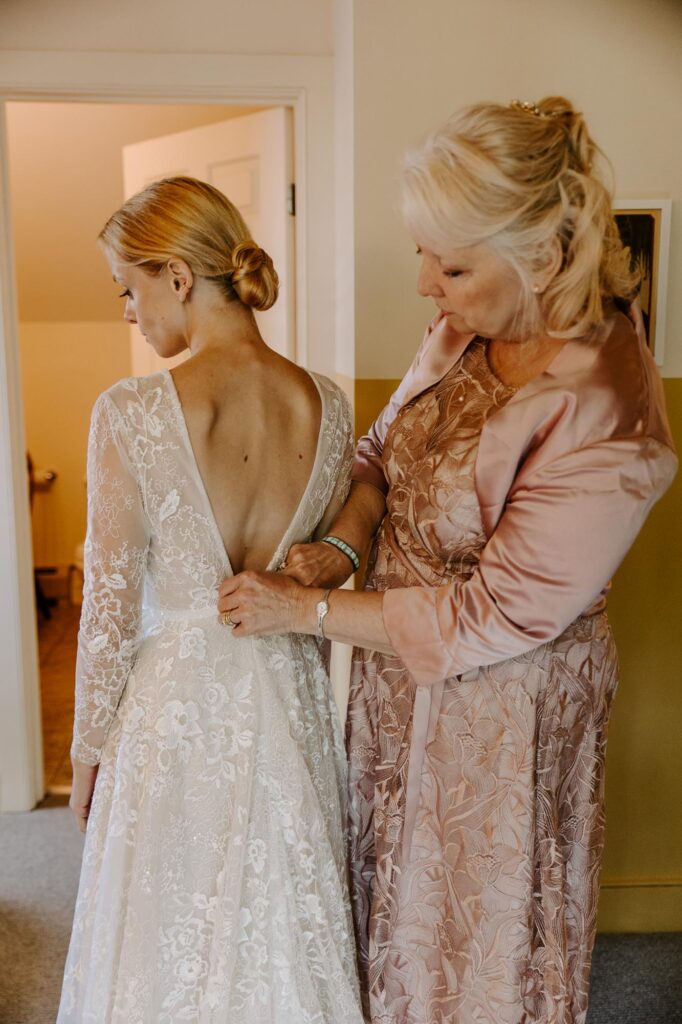
The photographs often happen in that time between events: someone helping you with a button, a conversation just after the ceremony, friends staying at the table after a toast. A timeline can give those moments room without trying to manufacture them.
I’m Eleni, a documentary wedding photographer working throughout New England. I help couples plan the photography around their celebration, including the portraits that matter to them. Here is how I would begin, followed by an eight-hour example you can use as a starting point.
Planning the day / Sample timeline / Without a first look / Questions
Start with the wedding you want to experience
Before arranging photographs, think about where you want to spend your time. Perhaps cocktail hour matters because your friends are traveling a long way. Maybe you want a quiet morning with your siblings, a long dinner, or a dance floor that has time to find its energy. Those priorities help us decide what the photography needs to hold.
- Put the fixed times in first. Your ceremony, meal service, venue access, and any traditions with a set time are the anchors. Share them with me and your planner or venue coordinator before we fill in the spaces around them.
- Count the time between places. Parking, walking to the ceremony, gathering family, and getting everyone into a car all take time. A short drive does not always mean a short transition.
- Decide what you want photographed. Getting ready and a late-night celebration require a different coverage window from a ceremony and dinner. My guide to choosing your wedding photography coverage compares six, eight, and ten hours.
- Leave some breathing room. A pause before the ceremony and a little space around transitions let you have a drink, find someone, or catch up if something runs late. Unscheduled time is still part of your wedding.
An eight-hour documentary wedding photography timeline
This example follows eight continuous hours, from 1–9 p.m., with a 4 p.m. ceremony. It assumes a 30-minute ceremony, nearby getting-ready spaces, a first look, and little or no travel. The exact portrait windows depend on your group sizes and plans. This is an illustration of how the day can fit together, rather than a schedule from a specific wedding.
| Time | The plan & the space around it |
|---|---|
| 1:00 p.m. | Coverage begins The setting, finishing preparations, and time with the people getting ready alongside you. There is no need to repeat something that has already happened for the camera. |
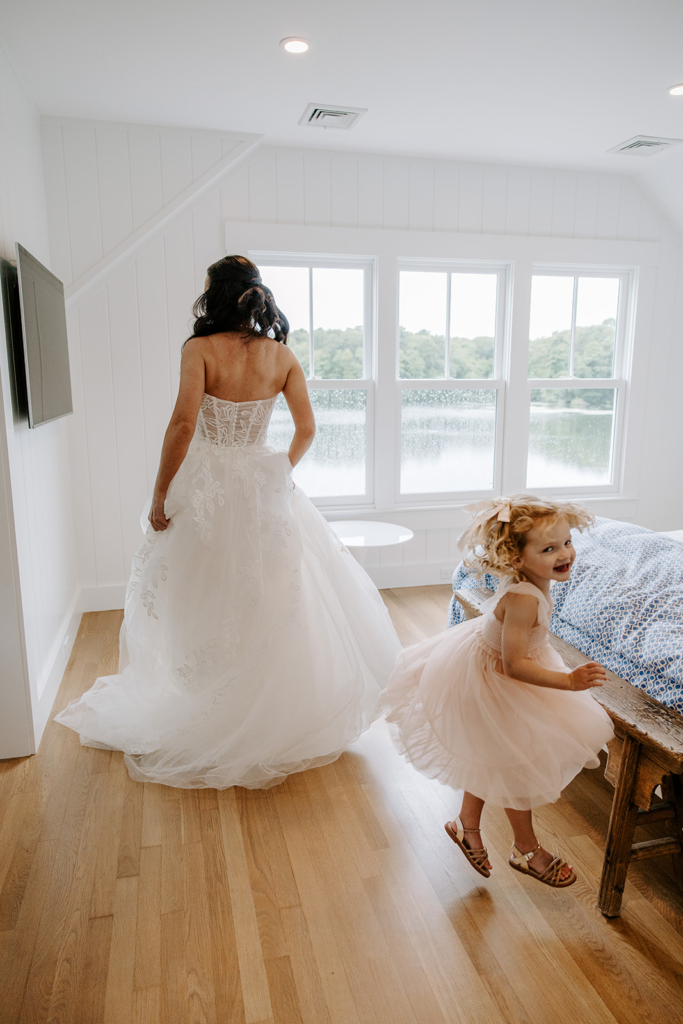
| 1:30 p.m. | Getting dressed Time for the final preparations, with the people you would like to help. If hair and makeup are part of your plans, agree the ready time with that team beforehand. |
| 2:15 p.m. | A first look, if you want one A little time to see each other before the ceremony. We choose a practical place and let the moment unfold. |
| 2:45 p.m. | Couple and wedding-party photographs Relaxed portraits together and any planned wedding-party photographs. We account for walking distances and the number of people involved. |
| 3:30 p.m. | A pause before the ceremony Put the flowers down, have some water, and get settled while guests arrive. I can photograph the gathering around you. |
| 4:00 p.m. | The ceremony The vows, the reactions, and the people sharing that part of the day with you. |
| 4:30 p.m. | Family photographs and cocktail hour We begin with an agreed family list, then you return to your guests. If those portraits are made earlier, more of this time can stay open. |
| 5:30 p.m. | The reception begins Entrances and a first dance, if you have chosen them, followed by time to settle in with everyone. |
| 6:00 p.m. | Dinner and toasts A shared meal, speeches, and the conversations around the tables. Coordinate the order with your caterer, planner, and DJ or band. |
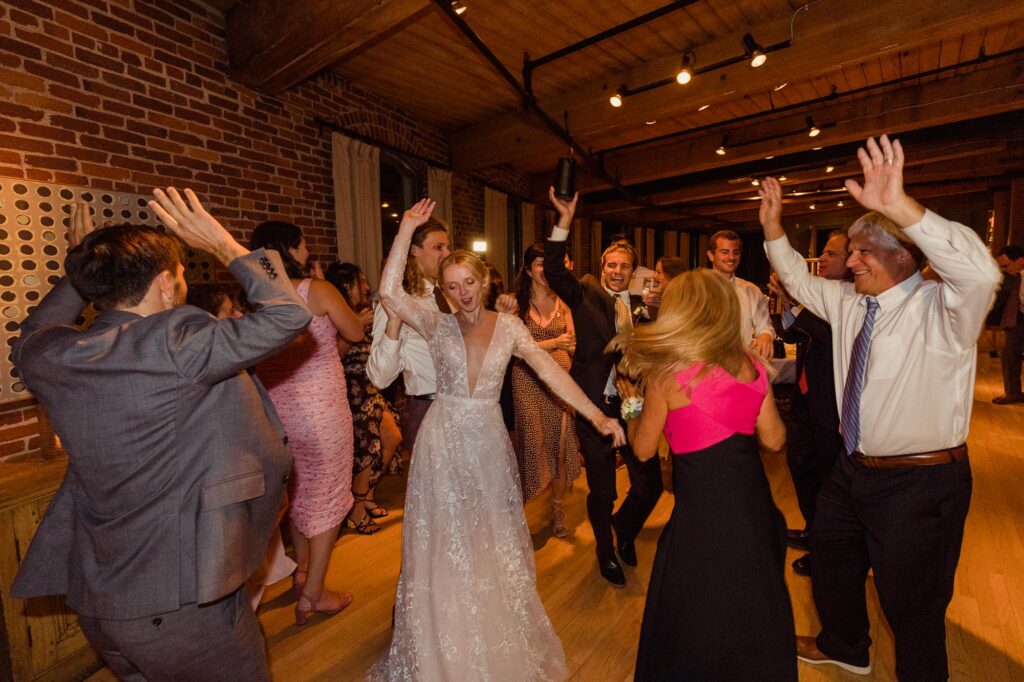
| 7:00 p.m. | Dances and the party Any parent dances you have planned, then open dancing and the evening as it develops. |
| 8:00–9:00 p.m. | The celebration continues Time for the dance floor, people stepping outside, and the smaller conversations around the room. Coverage ends at 9 p.m.; a later event would need a different coverage plan. |
A brief portrait walk in evening light can fit into this day when the season and location allow. It is deliberately not assigned a fixed clock time: we check the sunset for your date, consider the surrounding landscape, and find a moment that works with dinner and the rest of the celebration.
You can have a first look—or see each other at the ceremony
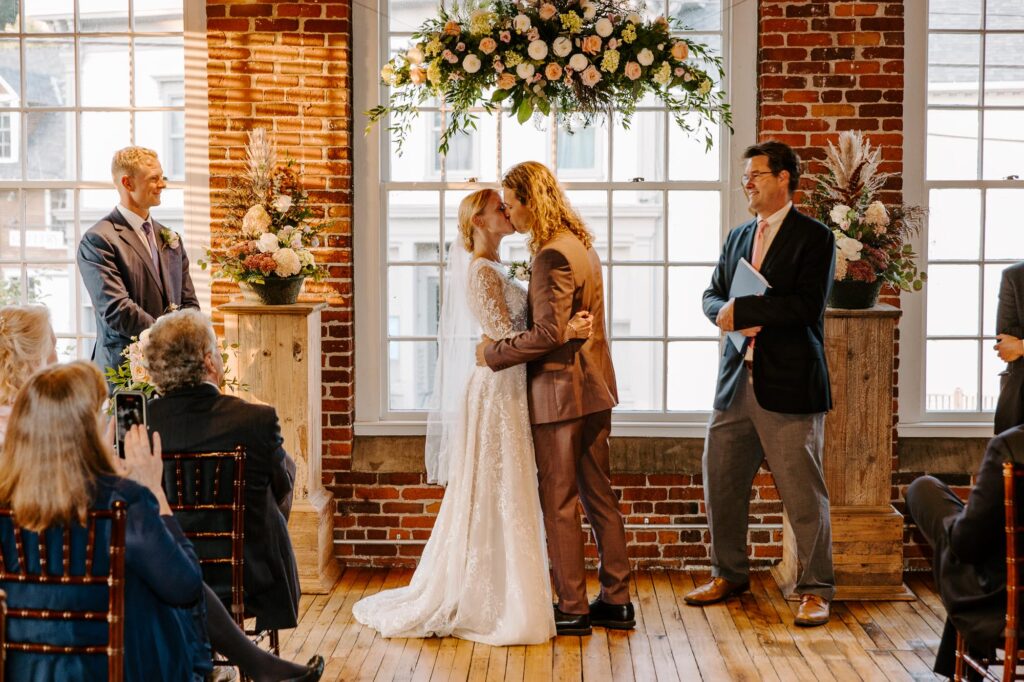
A first look can move some portraits earlier and free up time after the ceremony. It is also a personal choice. If seeing each other for the first time as you walk into the ceremony matters to you, we plan around that.
With a 4 p.m. ceremony and no first look, family, wedding-party, and couple photographs may share the 4:30–5:30 p.m. window. We might begin with family, make the wedding-party photographs, and then take a short walk together. The number of groups, walking distance, and available daylight determine what is comfortable.
If that leaves too little time with your guests, we can shorten the group list, make some individual family photographs before the ceremony, adjust reception timing with your team, or choose a longer cocktail hour if the venue and catering plans allow. We decide what to prioritize together.
Make family photographs easy to step into
Documentary photography can include the group photographs you will want to keep. The preparation happens beforehand: a short list with people’s names, the combinations that matter, and any family dynamics you would like me to understand privately.
Choose someone who knows the people on the list and can help gather the next group. Let everyone involved know where to be and when. A useful planning allowance for a small, agreed family list might be around 20–30 minutes; a larger list or a walk to the portrait location needs more time. We will work out the window from your actual list.
Couple portraits can be a short part of the day too. I offer direction so you know where to go and what to do, then leave room for you to be together. You do not need to carry a list of poses through the afternoon.
Getting ready, daylight & the details that change the plan
Let the preparations be part of the story
Think about who you would like around you while you get ready, and make room for them to be there. If there are objects you want photographed—rings, invitations, something borrowed—having them easy to find helps me work while the rest of the morning continues. The people in the room deserve attention alongside those details.
For partners getting ready in separate places, we account for the travel or discuss a second photographer to cover things happening at the same time. A second photographer gives another perspective; the booked coverage hours still need to fit the day.
Plan portraits around the light you will actually have
For New England weddings, the season makes a real difference to when daylight portraits fit. A late-fall or winter wedding may need them before the ceremony. On a summer evening, we may step out during the reception. We also consider shade, buildings, nearby hills, and an indoor option if the weather changes.
You do not need to reorganize a meaningful part of the wedding around a portrait. We look at the light and the plans together, then choose a sensible window. Rain may change the location or the timing; it does not stop the rest of your day from being worth documenting.
Give dinner and the evening time to happen
A dinner with your people is an event in its own right. Allow time for the food, the toasts you have chosen, and conversation before moving into the next thing. If there is cake cutting, an outfit change, or a real send-off you want photographed, make sure it sits within your coverage.
You can also choose a simpler reception. A shared meal and a playlist can be the whole plan. There is no need to add a first dance, staged exit, or extra event to fill a photography timeline.
How I help with your wedding photography timeline
I take time to understand your people, your priorities, and what you want the celebration to feel like. Together, we decide where the photography fits, including family portraits, travel, and time for the two of you. I coordinate the photography plan with your planner or venue team so it works alongside the running of the event.
For an intimate wedding, that might mean time at home before a ceremony and dinner. For a bigger gathering, it might mean allowing more time to bring family together or photographing different parts of the preparations. The guest count alone does not tell us how long the story will be.
If you would like film photographs alongside digital coverage, mention that when we plan. Film can be added to any package. It becomes part of documenting the day, with the details agreed before the wedding.
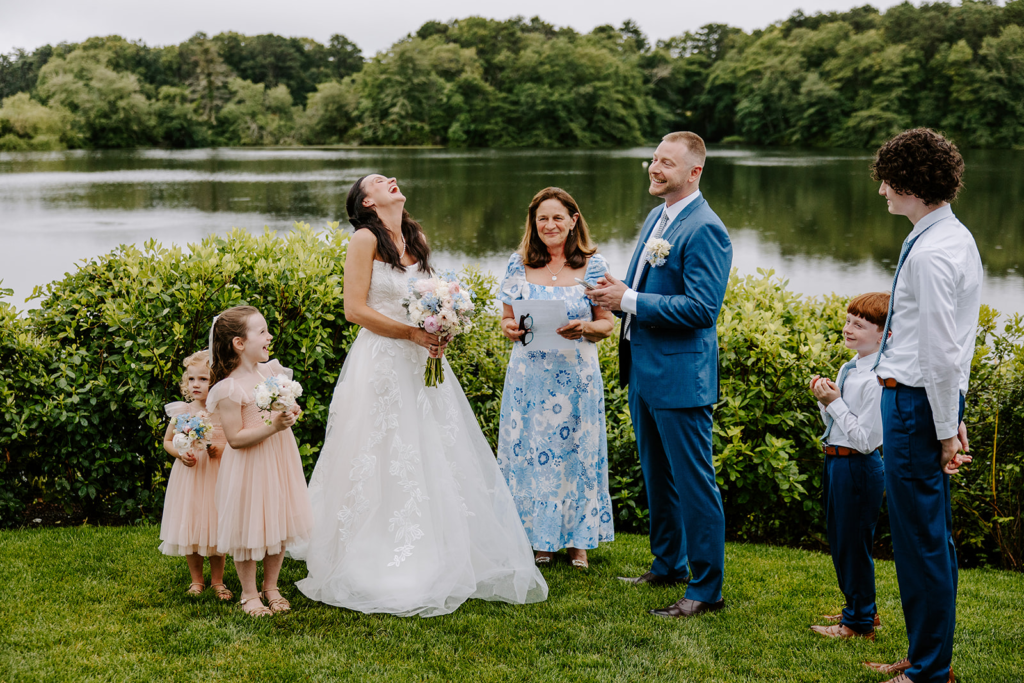
You can see how a smaller celebration unfolded in Meg and Sean’s Simon Pearce wedding story, or explore what documentary wedding photography means for more about my approach.
Wedding photography timeline questions
Do we need a timeline for documentary wedding photography?
Yes. Knowing when and where the main events will happen helps me be ready to photograph them, and gives portraits and travel the time they need. The timeline sets out the plans while leaving room for the day to unfold. You do not have to schedule the candid moments.
How much time should we allow for family photographs?
Start with the groups you actually want. Around 20–30 minutes can be a useful allowance for a small, agreed family list when everyone is nearby, but the number of combinations, walking distances, and access needs can change that. I help you work out a realistic window before the wedding.
Do we have to do a first look?
No. A first look can move some portraits before the ceremony, but you can also choose to see each other during the ceremony. We plan the family and couple photographs around that choice, the daylight, and how much time you want with your guests.
Can we enjoy cocktail hour and still have couple portraits?
Yes, depending on the plan. A first look and some portraits beforehand can leave more of cocktail hour open. Without a first look, we can keep the group list focused and discuss a short portrait window, with any additional photographs at another suitable point in the day. We agree the priorities rather than promise every combination fits into one hour.
Is eight hours enough for a documentary wedding timeline?
It can be, when the locations are close and the events you want documented fit into that window. The example here covers 1–9 p.m. More travel, a longer ceremony, or a late-night event may need a different start time or more coverage. Compare six, eight, and ten hours of wedding photography coverage.
What if the wedding runs behind schedule?
A little space around transitions helps absorb small delays. If the timing shifts, I work with you and the team to adjust the photography around what matters most. We discuss the coverage end time and options for extra time in advance; a delay does not automatically extend the booking.
A plan that lets you be part of your wedding.
Tell me where you are getting married, who will be there, and what you most want to remember. We can work through the photography together.